
Hydro demolition for controlled concrete removal
Hydro demolition, also written hydrodemolition, removes damaged or specified concrete with high pressure water. It can expose reinforcement without the repeated hammer impact of mechanical breaking. Dezu is a PCAB-licensed hydro demolition contractor in the Philippines, delivering Conjet robotic and precision hand-lance methods for structural repair scopes.
Delivered applications include railway walls and beams, turbine structures, shear-key exposure and viaduct pillars. The repair specification defines the removal boundary and the condition of concrete and reinforcement that must remain.
How is hydro demolition different from hydro blasting?
Hydro demolition removes the concrete itself to a specified condition or depth. Dezu uses hydro blasting for surface coatings and deposits, and hydro jetting for pipe and drainage cleaning. These waterjet terms overlap in industry usage. Compare the three methods by material and intended result.
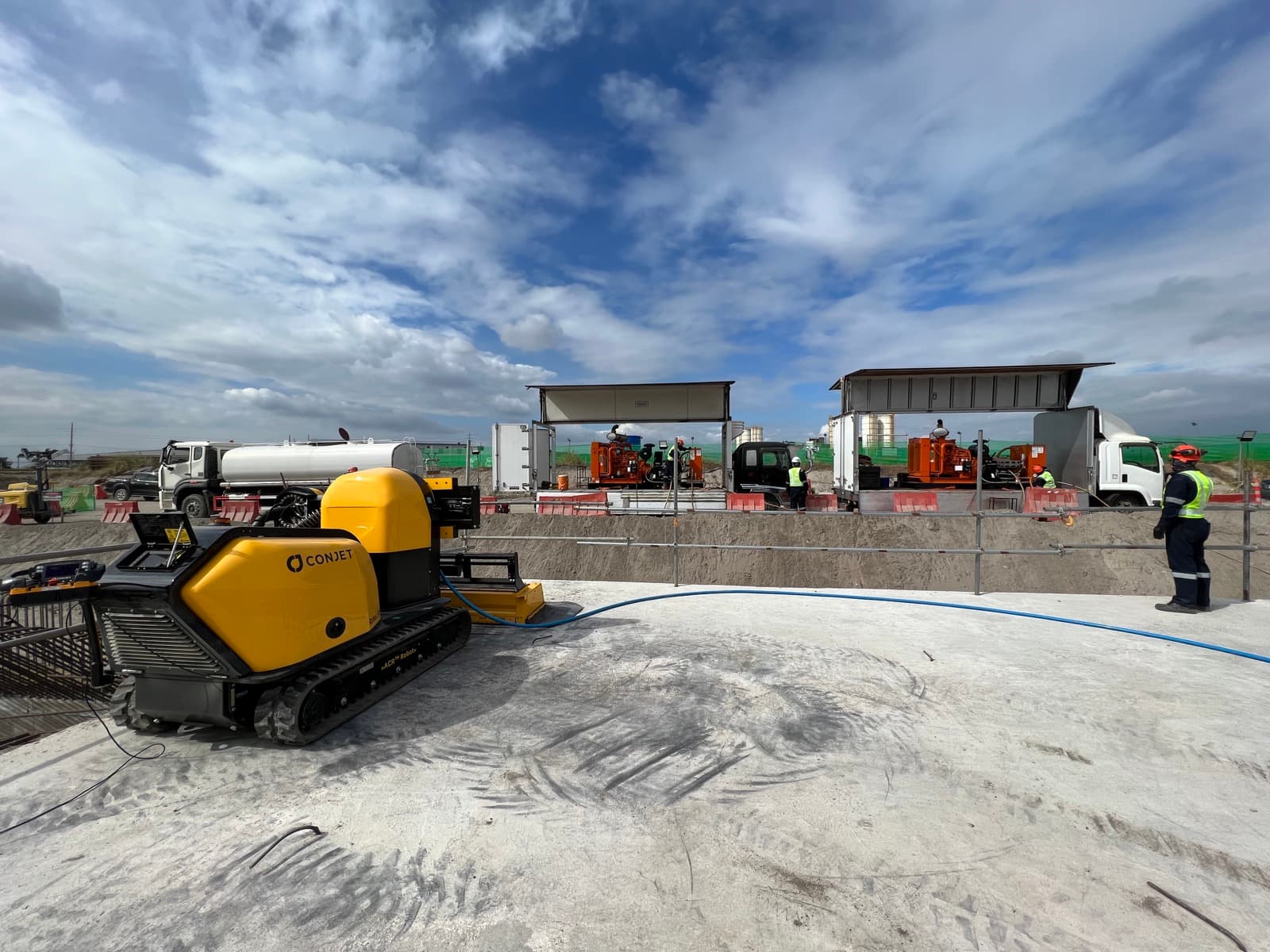
Conjet robot and NLB pump units mobilized for the underground railway project, 2024. Read the railway wall case study.
Full project records and client references are available in a meeting. The reactor-tank case is an equipment application for scale removal, not a concrete repair.
How does hydrodemolition control what concrete is removed?
A directed waterjet acts on the concrete while the operator or robot controls the coverage. Selective removal targets deteriorated material; removal to a specified depth can include sound concrete. The engineer defines the objective, and the method, trial area and inspection checks establish how to achieve it on the structure.
See Conjet’s explanation of selective and non-selective hydrodemolition.
Is Dezu licensed for construction-classified work?
Yes. Dezu Corporation holds PCAB Contractor's License No. 56253, documented safety and health programs for project requirements, and is a PhilGEPS Platinum member. We work inside PEZA zones and on permitted public infrastructure.
How is the removal accepted?
Agree the removal limits, retained reinforcement, substrate condition and next repair stage before work. The engineer or responsible inspector determines structural acceptance. Review the railway wall case and shear-key exposure case for completed applications.
What equipment and site information does hydro demolition need?
Send drawings or photos, concrete condition, removal area and depth, reinforcement details, access, structural restrictions and the required window. Confirm water supply, containment, wastewater and debris handling with the site. These inputs determine the pump, tooling, method and quotation.
Review Conjet hydrodemolition robots, NLB waterjet pumps and equipment rental options. Equipment selection and availability are confirmed for the particular scope.
What should you compare before specifying hydro demolition?
How much does hydro demolition cost in the Philippines?
Scope-based cost drivers, quotation inputs, and clearly labeled US DOT benchmarks.
Hydro demolition vs jackhammering
Cost, speed, and structural risk compared — including when jackhammering honestly wins.
How can you work with Dezu?
See the technology work on your actual problem before committing.
Hire Dezu as your specialized contractor, crews, equipment, and method.
Run our equipment on your site, with or without our operators.
Purchase your own units as the exclusive or authorized Philippine channel.
Keep your fleet running with service and genuine spare parts.
Build your own capability with operator training to OEM standards.
Have a concrete removal scope?
Send drawings or photos, the removal depth and area, and your window. We reply with method recommendation and a scope-based quotation.