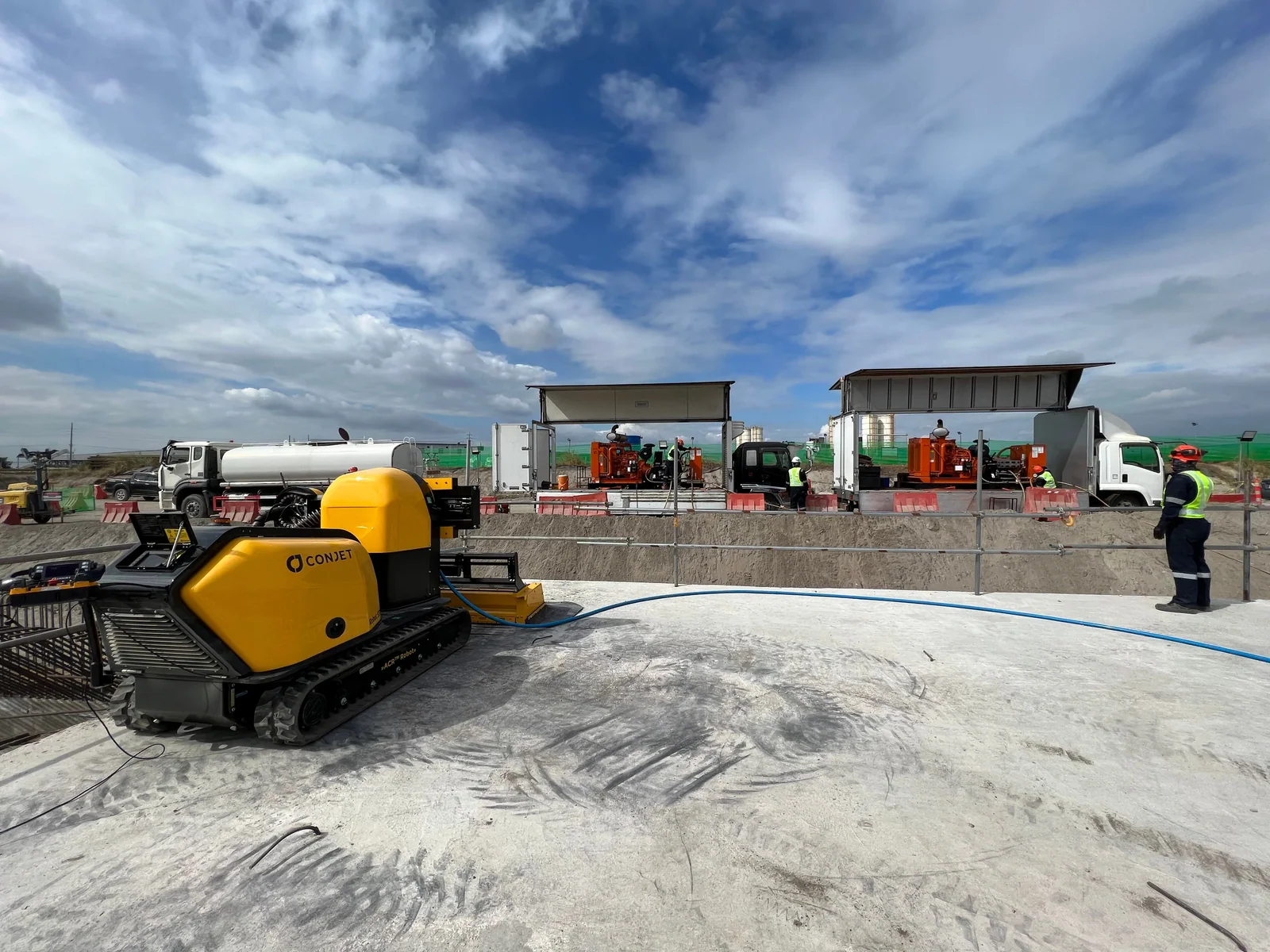
Honeycombed railway wall
Dezu used a Conjet robot to remove honeycombed concrete from an underground railway double-cell wall. The work addressed defects between pours in a thick concrete structure.
Read the railway project record →
Bridge and concrete repair preparation · Philippines
Dezu removes deteriorated or specified concrete using robotic and hand-lance hydro demolition. For bridge repairs, spalling, honeycombing and structural retrofit preparation, the objective is an exposed, inspectable repair zone within the engineer’s defined limits.
Discuss your projectSpecialist services · Equipment · Local support
01 The repair handoff
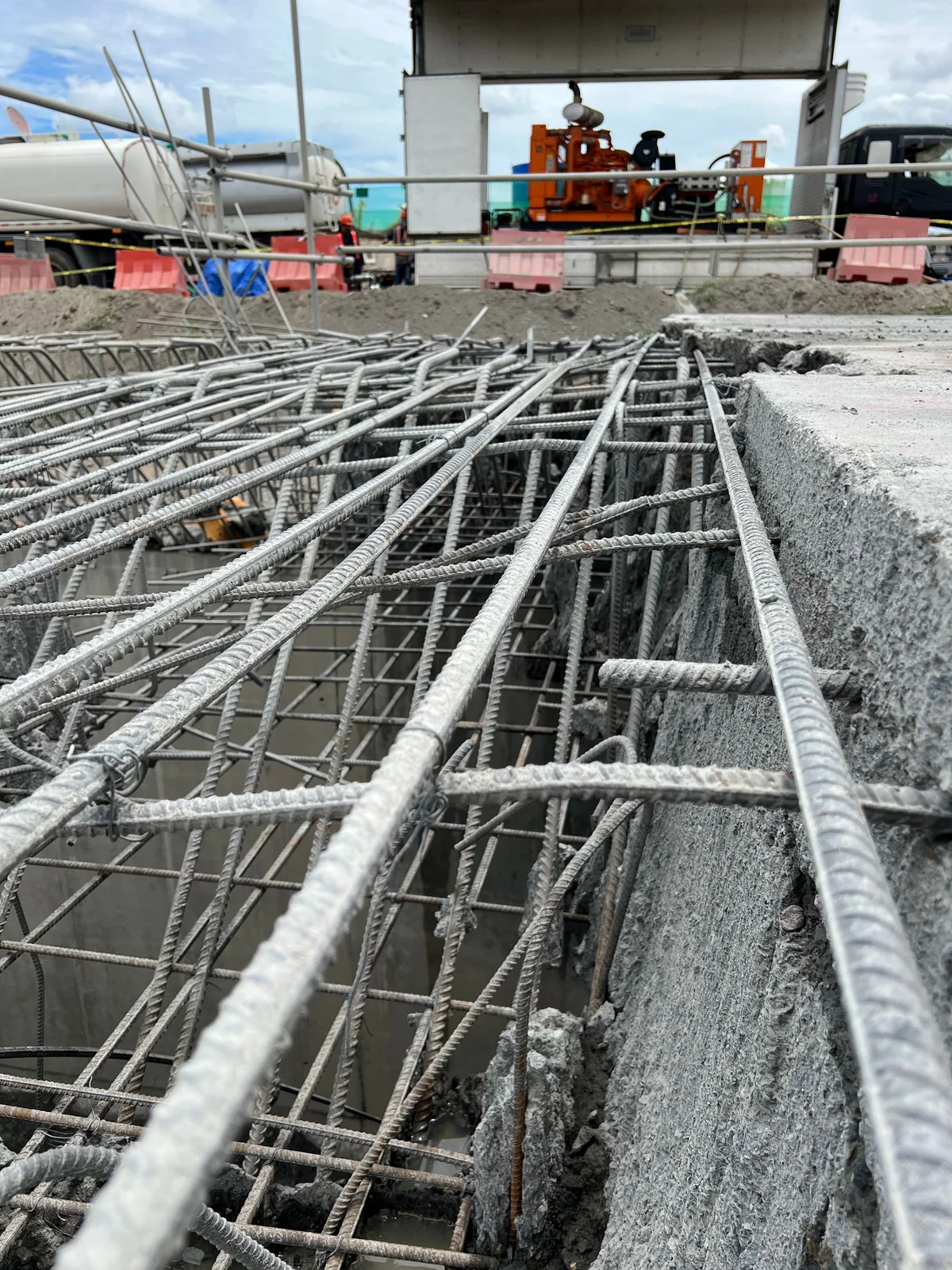
The repair team needs access to the material that must be inspected and treated. Removing the specified concrete exposes that zone so the engineer can assess the retained substrate and steel before the next repair stage.
01 Define the removal zone
The engineer identifies defective concrete, limits and reinforcement to retain.
02 Remove to the agreed limit
A controlled waterjet trial establishes the method for the actual concrete and access.
03 Inspect before repair
Check exposed steel and the prepared surface before the next repair stage.
Open the specified repair area for inspection of exposed reinforcement and the surrounding concrete.
Remove concrete within an agreed boundary so the repair team can assess the remaining section.
Expose reinforcement or connection details required by the strengthening or correction design.
02 Delivered Dezu experience
Dezu has delivered robotic railway removal and selective industrial connection exposure as a specialist subcontractor. These completed applications show the methods available for review against your repair scope.
Dezu used a Conjet robot to remove honeycombed concrete from an underground railway double-cell wall. The work addressed defects between pours in a thick concrete structure.
Read the railway project record →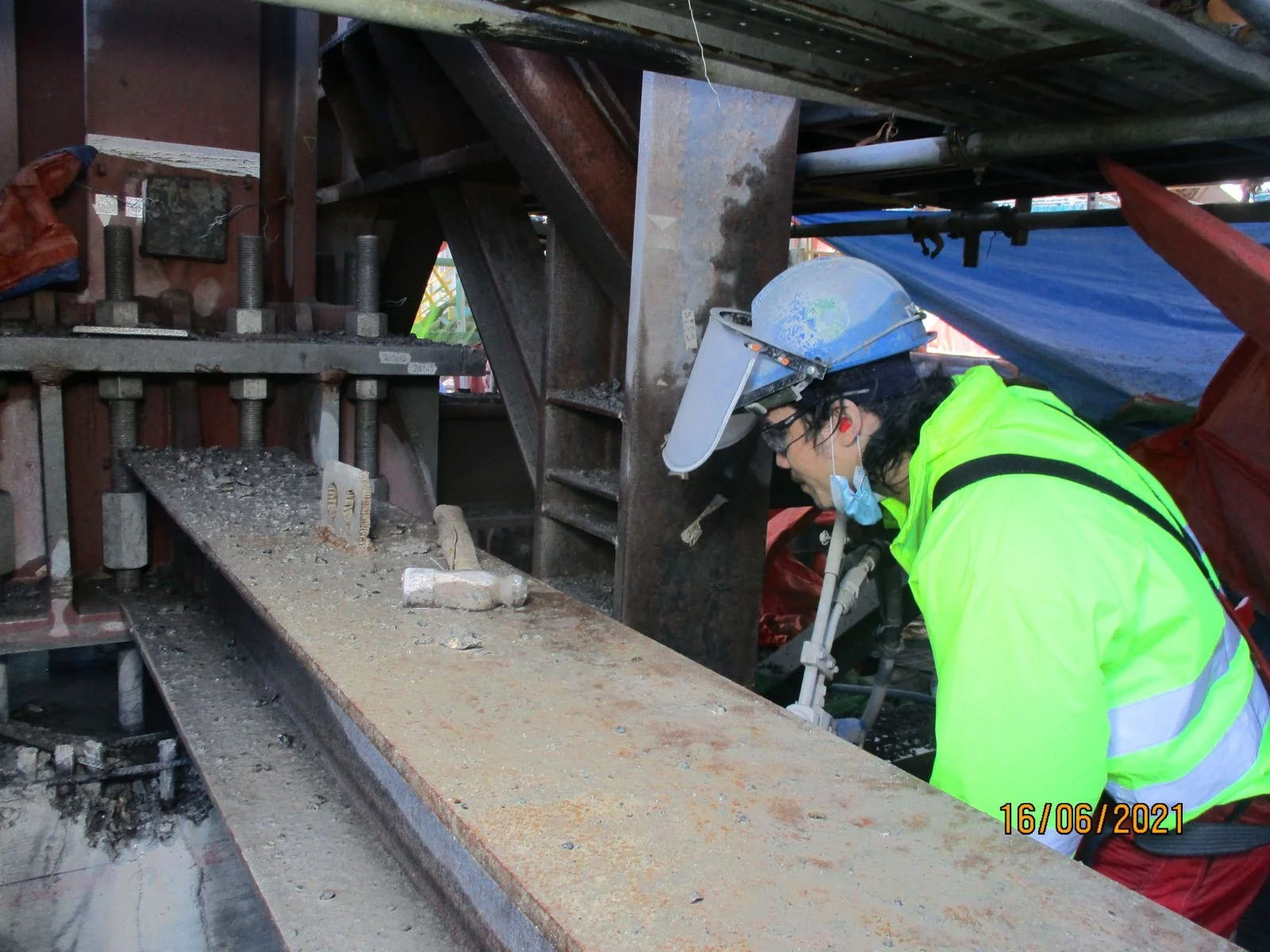
Dezu removed connecting concrete with hand-lance hydro demolition to expose a shear key. The connection was exposed for the project team’s planned lifting and correction of a structure affected by ground settlement.
Read the connection-exposure record →Clients remain unnamed in public case studies. Full project records and references are available in a meeting.
03 Match the method
Geometry, access, removal volume and the required condition determine the method. A robot suits accessible work areas with sustained coverage; a hand lance can address smaller or constrained zones. A trial area establishes settings and the inspection basis before proceeding.
Agree removal boundaries, retained reinforcement and concrete, structural support, embedded services and any post-tensioning restrictions with the engineer. Waterjet removal avoids repeated hammer impact; it still requires controlled execution and inspection.
Confirm pump and robot access, water supply, exclusion zones, shielding, debris collection and wastewater handling. Coordinate the inspection handover and repair crew before the removal window is agreed.
Review the hydro demolition method, compare hydro demolition and jackhammering, review quotation cost drivers, or explore Conjet robots and NLB pumps.
04 Before specifying
Use the waterjet scope and acceptance worksheet to agree removal limits, a trial area, inspection responsibility and the handover to the repair team before comparing quotations.
It can remove deteriorated or specified concrete and expose reinforcement for inspection and the next repair stage. The engineer must establish the cause, removal limits, reinforcement treatment and repair design. Waterjet removal alone does not restore structural capacity or resolve corrosion.
No. Retaining the specified steel and substrate is an objective established through the method, trial area and inspection criteria. The engineer defines the acceptable condition. Post-tensioned components, embedded services, structural support and restricted removal zones require specific review before work.
Dezu can review the specialist concrete-removal scope with the project team or principal contractor. The package requirements, permitted method, contracting route, current eligibility documents and equipment availability are confirmed for that project. The examples on this page are delivered railway and industrial work.
Start with the scope
Share the repair zone and the engineer's requirements. We will review access, method selection and the proposed removal package before quoting.
Email a project briefInclude what you know
The button opens a draft in your email app. For restricted drawings or bid documents, request a suitable sharing route first.